How Native Prairie Restoration Is Fighting Fulshear’s Floods

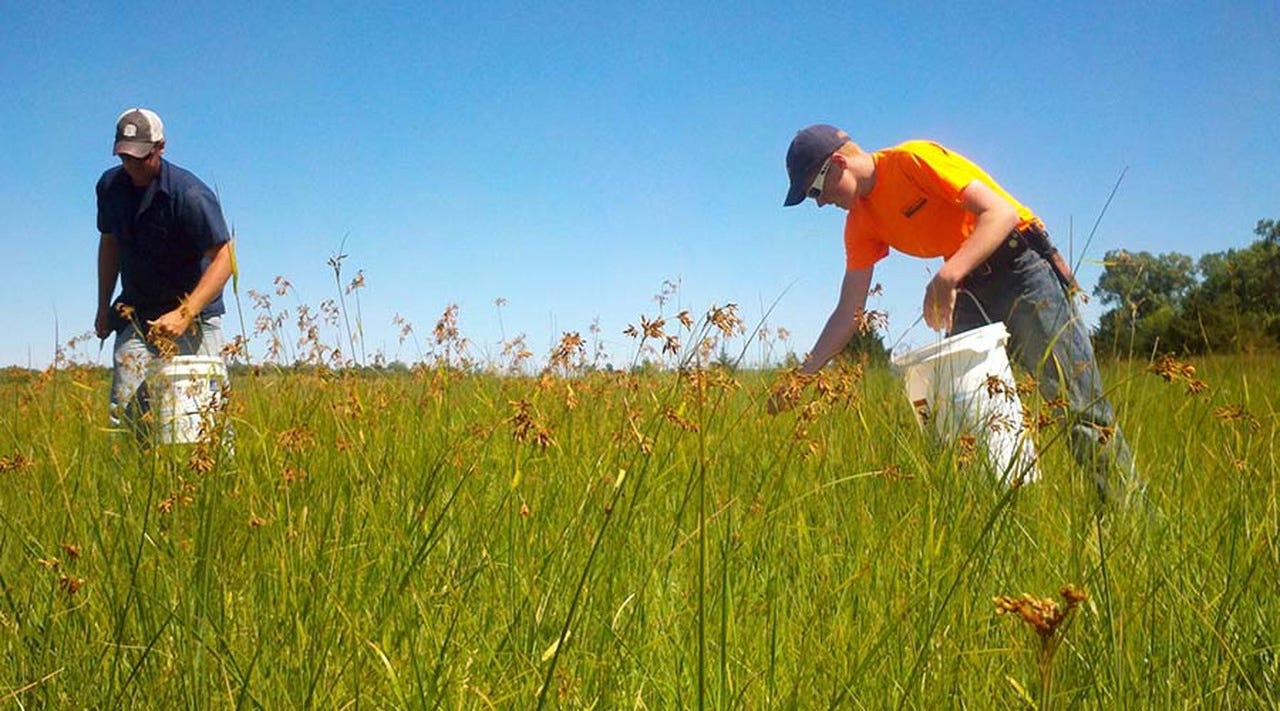
Beyond mere aesthetics, master-planned communities are increasingly integrating native Texas prairie grasses to absorb immense amounts of stormwater. In a region where every new subdivision paves over more of the coastal prairie that once soaked up rainfall like a sponge, Fulshear is quietly becoming a testing ground for an old idea made new again: letting the land do what it was designed to do.
The Problem Underneath the Pavement
Fulshear sits at the western edge of one of the fastest-growing corridors in Texas. Fort Bend County’s population has surged in recent decades, and with each new rooftop and cul-de-sac, another patch of native grassland vanishes beneath impervious surfaces — concrete, asphalt, compacted fill. Water that once percolated slowly through deep prairie soils now sheets across subdivisions and funnels into overtaxed drainage channels.
The consequences are not hypothetical. Hurricane Harvey demonstrated what happens when a landscape stripped of its natural hydrology is hit by a catastrophic rain event. But even routine storms can overwhelm engineered drainage when the land upstream has lost its capacity to absorb and hold water. For Fulshear, sandwiched between rapid development and the floodplains feeding into the Brazos River watershed, the stakes are especially high.
What the Prairie Used to Do — and Still Can
Before European settlement, the Texas coastal prairie stretched across roughly six million acres from the Louisiana border to Corpus Christi. It was one of the most biodiverse grassland ecosystems in North America, and it was also an extraordinarily efficient hydrological machine.
The secret is underground. Native prairie grasses like switchgrass, eastern gamagrass, and Indiangrass send roots plunging anywhere from five to fifteen feet into the earth — some species even deeper. Those root systems create vast networks of channels and pores in the soil, dramatically increasing its capacity to absorb and store rainfall. By contrast, the turf grass blanketing most suburban lawns roots to a depth of only four to six inches, offering a fraction of the infiltration capacity.
A study conducted by the Harris County Flood Control District found that one acre of native prairie can increase the infiltration capacity of undeveloped land by approximately 3.52 inches during a 100-year flood event. That figure represents the difference between water that gets absorbed into the soil profile and water that runs off the surface and into someone’s living room downstream. Scale that across hundreds or thousands of acres, and prairie restoration starts to look less like a landscaping choice and more like critical flood infrastructure.
The science behind the number is straightforward. Deep root systems do three things simultaneously: they physically break up compacted soils, they deposit organic matter that improves soil structure and porosity over time, and they create pathways for water to travel vertically rather than laterally. A healthy prairie doesn’t just slow runoff — it pulls water down into the soil and holds it there, releasing it gradually over days rather than hours.
The Coastal Prairie Conservancy’s Work Next Door
No organization has done more to quantify and preserve this natural flood infrastructure in the Fulshear–Katy corridor than the Coastal Prairie Conservancy, formerly known as the Katy Prairie Conservancy. The organization manages the Katy Prairie Preserve, which now spans over 19,500 acres of protected prairie, wetlands, farms, and ranchland west of Houston — land that sits directly upstream of some of the region’s most flood-vulnerable communities.
The Conservancy has partnered with the Harris County Flood Control District on three studies to quantify the flood-reduction value of preserved and restored prairie lands. They’ve also engaged P.B. Bedient & Associates to quantify the specific flood-mitigation benefits of their holdings and to model the additional benefits that would result from expanding those protections.
Their findings reinforce a simple principle: when restored coastal prairie absorbs rainfall, it slows water traveling downstream, buying time for floodwaters to recede before they inundate neighborhoods and commercial corridors closer to the city’s core. Grassland and wetland prairies act as natural detention systems, absorbing and gradually releasing rainwater rather than accelerating it into channels already at capacity.
In July 2025, the Conservancy permanently protected another 220 acres at Three Oaks Farm just outside Katy — land within the fifth-largest watershed in the Houston area. That acquisition wasn’t primarily about conservation for its own sake. It was about keeping permeable, absorptive land in the path of stormwater before it reaches downstream development.
The Conservancy’s Blazing Star Prairie restoration project, which came online in late 2025, represents the newest addition to this growing network of restored grasslands functioning as green infrastructure.
Cross Creek Ranch: Prairie Principles in a Master Plan
Perhaps the most compelling example of prairie-informed development in Fulshear is Cross Creek Ranch, the 3,200-acre master-planned community developed by Johnson Development Corp. The project’s landscape architecture, led by Houston-based SWA Group in consultation with Biohabitats, a nationally recognized conservation planning and ecological restoration firm, has integrated prairie ecology into the community’s core infrastructure in ways that go far beyond decorative plantings.
The centerpiece is the restoration of Flewellen Creek, a project that transformed a degraded 130-acre drainage ditch — the remnant of decades of agricultural use — into a functioning two-mile riparian ecosystem. Using principles of fluvial geomorphology, the design team re-established natural creek dynamics: reintroduced meanders that doubled the creek’s effective length, widened the floodplain corridor to between 450 and 600 feet, and created a restored base-flow channel with a lower floodbench engineered to handle storm surges.
Within that corridor, the team replaced invasive species with indigenous vegetation arranged in functional zones — native reforestation areas, prairie grassing zones, and water-cleansing wetlands. A 50-acre polishing pond and water treatment facility feed the creek while filtering community irrigation water. The result is a system that doesn’t just manage stormwater — it treats it, stores it, and releases it on a timeline that mimics the natural hydrology the development displaced.
The proof came during Hurricane Harvey, when the restored floodplain corridor shielded surrounding homes from the kind of catastrophic flooding that devastated other communities in the region.
Since the Flewellen Creek restoration’s completion, wildlife has returned in abundance. Native fish, turtles, and migratory birds now thrive among strategically placed habitat structures — an ecological dividend that underscores the difference between engineered drainage and restored ecosystems.
The Science of Roots as Infrastructure
Understanding why prairie restoration works as flood mitigation requires looking at the mechanics of soil infiltration. Houston-area soils are predominantly clay, which in its compacted state allows only slow permeation of rainwater — Houston’s design standards specify base infiltration rates of just 0.27 to 0.50 inches per hour. That’s the baseline for conventional engineering.
Native prairie grasses rewrite those numbers. Their root systems — dense, fibrous, and extending many feet into the subsoil — physically restructure the soil over time. They break up compacted clay, introduce organic matter that binds soil particles into aggregates with larger pore spaces, and create vertical channels that persist even after individual roots die and decompose. The cumulative effect is a soil profile that can absorb and store dramatically more water than either bare ground or turf-covered land.
Research supported by the U.S. Geological Survey has compared rain gardens planted with turf grass against those planted with native prairie species, testing performance across both sand and clay soils. The findings consistently show that prairie vegetation outperforms turf in infiltration capacity — a result driven by the depth and density of native root systems.
This isn’t merely a matter of speed. Prairie soils also store water longer, releasing it gradually through a combination of root uptake, soil moisture retention, and slow percolation to the water table. That temporal dimension is critical for flood management: the goal isn’t just to get water off the surface, but to delay its arrival at downstream channels, spreading the peak flow over a longer period and reducing the height of flood crests.
More Than Fifty Pocket Prairies and Counting
The prairie-as-infrastructure concept has also taken hold at a smaller, more grassroots scale across the Houston metro. Since 2008, more than fifty miniaturized “pocket prairies” have been planted around the region — in schoolyards, church lots, corporate campuses, and residential neighborhoods. These compact patches of native grasses and wildflowers function as decentralized stormwater management systems, each one a small node in a distributed network of permeable ground.
For Fulshear homeowners and HOAs, the pocket prairie model offers a way to contribute to the community’s flood resilience without waiting for large-scale infrastructure projects. A front yard converted from St. Augustine turf to a mix of native grasses and wildflowers may not look like flood infrastructure, but the root systems growing beneath it are doing exactly that work — pulling water down, holding it in place, and keeping it out of the storm drain.
What Comes Next
The tension between growth and hydrology isn’t going away. Fulshear will continue to add rooftops and roads, and every acre of impervious surface increases the volume and velocity of stormwater runoff. The question is whether the community’s development practices can incorporate enough permeable, deeply rooted ground cover to offset what’s being lost.
The evidence from the Coastal Prairie Conservancy’s research, from Cross Creek Ranch’s Flewellen Creek restoration, and from the broader science of prairie hydrology all point in the same direction: native grasslands are not a sentimental throwback. They are functional infrastructure — cheaper to maintain than concrete detention basins, more resilient than engineered channels, and capable of providing flood mitigation, water filtration, carbon sequestration, and habitat simultaneously.
For a community built on former prairie, the most forward-thinking thing Fulshear can do might be to bring some of it back.
Proudly Supported By

Car Talk is a production of Cartalk Digital Inc. We offer unbiased reviews and advice, bad jokes, and a great community for car owners and shoppers. Happy driving and remember... don’t drive like my brother. Visit us at Car Talk to learn more.
Want to see your business here? Contact us at sponsors@aboutfulsheartexas.org for sponsorship opportunities.
Supporting Our Local History. All proceeds from “About Fulshear, Texas” sponsorships go directly to the Fulshear Historical Association, a registered 501(c)(3) nonprofit dedicated to preserving and celebrating the rich heritage of our community.